 Search
What is a green paper and what do we know about the proposed changes to benefits so far?

- 9 April, 2025
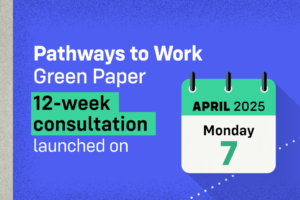
Following the publication of the ‘Pathways to work’ green paper many members have got in touch asking how the proposed changes are going to affect them. In this article EDS UK member Martin Roberts LLB (Hons) LLM, an advisor at Citizen’s Advice Bureau, has explained what a green paper is and gone through what we know now. We encourage all our members to have their say in the consultation by following the link here https://www.gov.uk/government/consultations/pathways-to-work-reforming-benefits-and-support-to-get-britain-working-green-paper . We also encourage you to take action by joining Scope’s ‘The Cost of Cuts’ campaign by signing their petition (currently at nearly 70k signatures) and writing to their MPs. https://www.scope.org.uk/campaigns/the-cost-of-cuts
What is a green paper?
Green Papers are consultation documents produced by the Government. The aim of this
document is to allow people both inside and outside Parliament to give the department
feedback on its policy or legislative proposals (i).
Which government has proposed the current green paper on social security cuts?
At present, it is only the sitting UK Government who have proposed changes. This means if
the green paper becomes law, it will only affect the areas of which the UK government has
jurisdiction over. Certain parts of the UK enjoy devolution powers, and some social security
has been fully devolved (ii).
Which governments have devolved social security?
England:
England operates their social security via Department for Work and Pensions. Previously,
HMRC had control over certain benefits such as tax credits but this has since ceased. The
UK government hold full control over decisions made in England, and any changes made will
have a direct impact on England.
Wales:
Wales to date has not devolved social security benefits, and operates using Department for
Work and Pensions. Any changes made will have a direct impact on Wales.
Scotland:
Scotland (iii) has partial devolution over social security, this means any changes made by the
UK Government to Personal Independence Payment won’t automatically impact Scotland.
Scotland operates using Social Security Scotland who administer Adult Disability Payment.
ADP operates using a similar threshold to the UK government. In Scotland, they do not carry
out assessments and instead rely on medical evidence to be provided. Citizens of Scotland
do have the right to request a consultation on their claim, where there is a lack of extensive
medical evidence (iv).
Universal Credit, Employment and Support Allowance, Job Seekers Allowance remain under
the control of the UK government and are administered by the Department for Work and
Pensions. Any changes the UK government make to these benefits would directly impact
Scotland.
Under the Scotland Act 2016, Scotland has devolved responsibility for Social Security and
they have powers to create new benefits. An example can be seen in the Scottish Child
Payment, which is an additional child benefit for Scotland only. This means Scotland could
implement their own changes, or top-up should they choose to with budget allowing.
Northern Ireland:
Northern Ireland (v) has partial devolution for social security, this means changes made by the
UK government to Personal Independence Payment won’t directly affect Northern Ireland.
Northern Ireland operates their disability benefit under Personal Independence Payment and
closely aligns their own benefits with the UK Government. Although they operate using the
same name as the UK Government, they have full devolution over this disability benefit and
are responsible for implementing their own decisions. Although Northern Ireland have
devolved powers for their own benefits, under section 87 of the Northern Ireland Act 1998 –
Northern Ireland maintains parity with Great Britain. This would mean, if there are substantial
changes made by the UK Government Northern Ireland would likely follow suit. However,
Northern Ireland has the power to mitigate and could implement their own measurers as they
did with Universal Credit.
Unlike Scotland, Northern Ireland has responsibility for administering Employment and
Support Allowance and Job Seekers Allowance. However, Universal Credit is administered
by the UK Government by Department for Work and Pensions.
What it means for Northern Ireland is currently unclear, under statutory legislation that
provided devolved powers they would be obligated to make similar changes to remain
parallel to the UK. There is the possibility they would create their own legislation and create
a package of welfare top-up to mitigate the changes as they have in the past.
Summary findings:
At present, none of the devolved nations have created their own green paper or given a
clear stance on what actions they would carry out. The future largely depends on the budget
set, if the Department for Work and Pensions budget is cut this will impacted the devolved
nations budget. Although Scotland and NI have devolution in this area, they potentially could
be forced to implement the same or similar changes. If this happens, there is the potential for
Scotland and/or NI to implement mitigating legislation.
(i) https://www.parliament.uk/site-information/glossary/green-papers/
(ii) http://parliament.uk/about/how/role/relations-with-other-institutions/devolved/
(iii) Scotland Act 2016
(iv) Social Security (Scotland) Act 2018
(v) https://commonslibrary.parliament.uk/research-briefings/cbp-
9048/#:~:text=Social%20security%20in%20Northern%20Ireland,which%20are%20'excepted'%20powers.
What is the green paper aiming to change, and will this become law?
First off, it is important to note that the green paper is the sitting UK governments intention.
Often with situations like this, there are various consultations, lobbying and legal challenges.
The previous sitting government had a Judicial Review claim brought against their
consultation on similar changes and was found to be unlawful. The current government will
likely also have to defend their actions in a Court of law under a claim for Judicial Review. If
the changes or lack of consultation is found to be unlawful, they would have to then remedy
the situation before moving forwards. Therefore, the changes in the green paper may be
different to what appears on the White Paper laid before parliament in Westminster.
The main takes from the green paper are significant changes to three key benefits;
1) Personal Independence Payment
2) New Style Employment Support Allowance and Job Seekers Allowance
3) Universal Credit
1) Personal Independence Payment:
This is the first key change they are looking to implement. A decision was made not to take
the below into consultation, instead what is up for consultation is how to help those people
impacted by this change rather than looking at how the change will impact people.
The aim is to reduce the number of people eligible to claim Personal Independence
Payment, and focusing on those who need it the most with additional living costs as a result
of living with a disability. The argument being made, is there are people qualifying for this
benefit, but have no extra living costs. Often the additional living costs can be hidden into
daily expenditure. Examples can be from purchasing pre-cut fruit/vegetables which are more
expensive than buying fresh then chopping at home. All the way to spending money on a
personal assistance, services such as house cleaner or dog walker to name a few.
It is common for the above additional services to be offset by Personal Independence
Payment, which allows disabled people independence and to work or carry out other
essential tasks.
The current system looks at an individuals Daily Living and Mobility. For each a person
needs to score a minimum of 8 points for standard or 8 for enhanced. The proposed
changes would apply a second scoring level above this, a person would need to score a
minimum of 4 points in any one Daily Living descriptor. An example would be, you would
need to evidence that on the majority of days you need Supervision or Assistance to prepare
and cook a basic meal for one person, safely, timely, repeated and to a quality standard. It is
common for people to be awarded descriptor B for this task which is completing using an
aid/adaptation/prompted/encouraged or able to use a microwave for the task.
For more clarity, please visit https://www.benefitsandwork.co.uk/personal-independence-
payment-pip/pip-points-system which breaks down the descriptors and shows where 4
points or above are awarded.
The planned change for the above is November 2026! If the current proposal goes
ahead, then anyone due a review or making a new claim after this date will be subject
to the new rules.
2) New Style ESA and JSA:
The proposed plan would be to scrap these two benefits, and instead create a single
Unemployment Insurance which would be time limited. There would be support to get people
to re-enter work, and for those with health conditions there would be additional support offered.
It is unclear how people will be assessed as needing which level of support, but will be paid
at the same rate as ESA. The time-limit is yet to be discussed in more detail, after this
amount of time the person would be expected to claim Universal Credit.
The main change of this is for those with partners, or savings that mean they have no
entitlement to Universal Credit. This meant claiming ESA long term was the only option to
supplement the loss of income.
Currently, a person would undergo a Work Capability Assessment and then be placed in one
of three groups. With the Support Group being a long-term option, with the only way out of
this group would be by undergoing a reassessment or declaring a change of circumstances.
The current proposal is scraping such assessment, and there has been no confirmation as
yet on the plan to assess the need for this insurance benefit.
3) Universal Credit:
There have been a number of changes announced, including up-lift of the standard rate and
freezing of the “health element”. Health element would currently mean Limited Capability for
Work and Work Related Activity.
Currently, when claiming Universal Credit the default position is you’re expected to look or
prepare to look for work. Those on Limited Capability for Work, are provided breathing space
either to recover from surgery, treatment or other scenario where there is an expectation the
individual will be suited to work with some support. The Work Capability Assessment is
triggered by providing fit notes, and a person is assessed by a qualified professional. At
present the Work Capability Assessment looks at work related aspects, such as ability to get
to a workplace, ability to sit and move etc where as Personal Independence Payment looks
at Daily Living Tasks and Mobility.
The current proposal will scrap the assessments in 2028, and merge the two together into a
single pathway for assessment. Those deemed as being unfit to work, will be placed on the
UC Health Element.
There will be a Right to Work initiative implemented, meaning those who are already on the
Health Element or LCWRA will be able to trial work and not face reassessment as a result of
this. In some scenarios, this is welcomed news and could provide a safety net for those who
are keen to trial some form of work to see how it would impact them without risking their
benefits. For others, it will feel like more pressure to return to a workplace and further impact
their health.
If you will be impacted by any of the above changes, write out to your local MP. Be specific,
and link it to you personally. Live case examples impact the hardest.
PIP: List your added living costs, explain how you use your PIP money and how it helps
keep you independent or staying able to work. If removing your PIP award would impact
your ability to work, explain this. Give a background to how your condition impacts you, and
why you need the added support that PIP allows.
ESA/JSA: If you are a household that wouldn’t qualify for Universal Credit, explain this and
how being pressured to work would impact you. Stress the difficulties of obtaining
remote/hybrid work to suit your condition.
Universal Credit: If you have previously worked, and this was detrimental to health, explain
your story. Discuss how you’ve previously worked, but made your condition worse. Any
scenarios of poor support from employers (no need to name and shame).
The above provides more impact than filling in a templated lobbying letter. MP’s having live
stories of the proposed impacts will have the most benefit and chances of making change.
PIP: If you are newly applying, or undergoing a review it is recommended you look through
the awarded descriptors even if you gain an award. If the descriptors don’t match your
scenario and you can back this with evidence, then consider asking for a review/appeal. If
you have been given an award, always seek professional advice from a welfare rights
organisation such as your local council or Citizens Advice Bureau.