 Search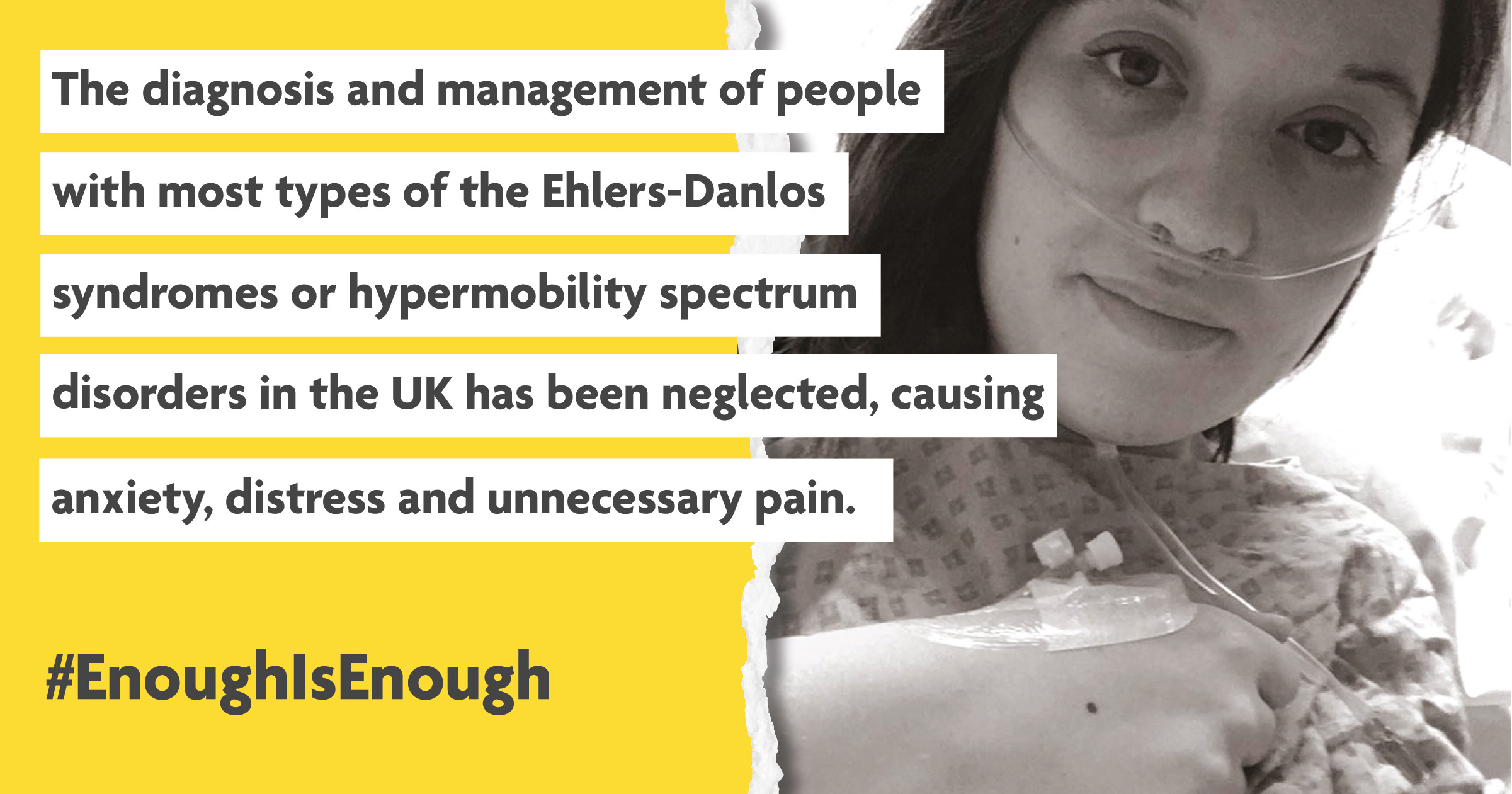
#EnoughIsEnough
 For several years, we have been working ‘behind the scenes’ supporting individual clinicians, allied health professionals and their teams to help improve NHS services for people with any type of Ehlers-Danlos syndrome (EDS) or hypermobility spectrum disorders (HSD). We have funded research and medical education events and we partnered with the Royal College of GPs and a highly committed group of professionals to develop the EDS toolkit for GPs. We have communicated with a variety of organisations and worked through umbrella bodies to influence the development of UK guidelines for the diagnosis and management of EDS and HSD.

This campaign is necessary not only to improve the health outcomes for patients, but in equal measure to reduce unnecessary health and social costs borne by the patients and the NHS. With limited access to planned care, this patient group is unable to study, train and work and often needs unpaid carers. Most of their healthcare visits are unplanned, often via emergency departments.
Dr. V. Saravanan, Joint Clinical Lead for Rheumatology, QE Gateshead
We are very pleased to work closely with the Ehlers-Danlos Syndrome National Diagnostic Service in Sheffield and London, commissioned by NHS England, and we regularly see and hear what an excellent job they do for adults and children with rarer types of EDS. However, the service is not available to people showing signs and symptoms of hypermobile EDS (hEDS) or HSD.
The diagnosis and management of people with hEDS or HSD has, to date, relied on the personal interest, knowledge and commitment of a small number of clinicians and allied health professionals rather than on formally commissioned services. Historically, those showing signs of hEDS or HSD have been referred to rheumatology departments. In 2021, rheumatology departments in England were directed to stop seeing these patients in favour of their diagnosis and management in primary care. Primary and community care is not currently equipped for this role.
In 2017, the National Services Division in Scotland committed to producing a paper for regional directors of planning, highlighting which issues and service gaps people with EDS and HSD encounter. To our knowledge, this has not been written. In 2019, a proposal to the National Services Division for a specialist EDS centre for Scotland was rejected, despite almost unanimous support from healthcare professionals. A commitment was made instead to enhance regional expertise and services. This has not yet happened.

The lack of specialised services for patients with hEDS often results in delayed diagnoses, inadequate treatment options, and a lack of understanding among healthcare providers. This can lead to prolonged suffering, decreased quality of life, and unnecessary disability.
Dr Hanadi KazKaz, Consultant Rheumatologist, University College London Hospitals
Unique tertiary services at University College London Hospital and The Royal London Hospital have also closed to out of area patients. This situation has led to inequalities in access to healthcare for those with hEDS and HSD across the UK and for people with rarer types of EDS in Wales and Northern Ireland. This is causing anxiety, distress, and unnecessary pain and suffering for those waiting for diagnosis, those on inappropriate treatment pathways, and their families.
We call upon the governments in England, Scotland, Wales and Northern Ireland to fund or commission suitable NHS services for those with hEDS and HSD and to consult with patients on their design and delivery. We call upon the governments in Wales and Northern Ireland to commission suitable NHS services for those with rare types of EDS.