 Search
Exciting new research into exercise and vEDS announced.

- 4 March, 2025

- EDS UK news
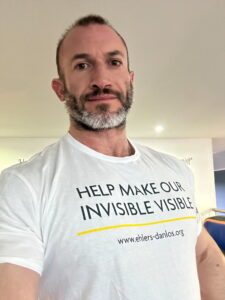
PhD student Mr Ian Thistlewood, a qualified physiotherapist and personal trainer.
We are delighted to announce that Annabelle’s Challenge and The Ehlers-Danlos Support UK are jointly funding a new research programme together with Sheffield Hallam University for the benefit of adults living with vascular Ehlers Danlos syndrome (vEDS). For the purposes of the programme, researchers will work alongside people with vEDS, carers and healthcare professionals to develop and investigate the feasibility of a vEDS-bespoke exercise-based, lifestyle intervention. A primary aim of this research is to build a starting point for a larger body of work, creating evidence-based guidelines for exercise in adults with vEDS. This information will be shared to help people to live well with this condition.
The programme brings together key academic researchers from Sheffield Hallam University. The Principle Investigator, Professor Markos Klonizakis leads the Lifestyle, Exercise and Nutrition Improvement (LENI) research group and is joined by Ms Emily Newton, senior lecturer from the School of Sport and Physical Activity. Emily specialises in the prescription of exercise for long term conditions and is an experienced exercise professional, with many years delivering cardiac rehabilitation. LENI Research Group has extensive experience developing lifestyle interventions for people with Non-Communicable Diseases; experience that will be put in good use during this programme. They will work alongside Professor Nigel Wheeldon, Dr Glenda Sobey and Ms Jess Bowen, together with other key specialists in vascular EDS.
Dr Sobey and Ms Bowen, of the UK Ehlers-Danlos Syndrome National Diagnostic Service, acknowledge that exercise has a vital role in wellbeing for everyone, but needs careful consideration for those with vEDS, due to tissue fragility and vascular risk. Recommendations around lifestyle and exercise are an important part of our regular consultations and follow-up for individuals with vEDS. With over 250 patients with vEDS accessing the clinic in Sheffield where Dr Sobey and Ms Bowen are based, conversations about how to exercise safely happen regularly. Evidence-based guidelines will complement this wealth of clinical experience and will be a valuable resource for professionals and patients worldwide.
Jared Griffin, Founder and CEO of Annabelle’s Challenge, said that ‘quite often people with vEDS want to participate in activities that professionals would recommend against. Other people with vEDS feel worried about exercising at all. He feels that this programme is essential to help people to make informed decisions and gain a better understanding of how to exercise safely.’
Susan Booth, CEO of EDS UK, said that equitable access to care is the cornerstone of EDS UK’s vision and mission. This programme will help their Adviceline provide evidence-based guidance when needed.
Professor Klonizakis and Ms Newton shared their excitement to be able to lead this new line of research, supporting people with vEDS in leading a healthier and more active life.
To undertake the research, the team at Sheffield Hallam University have recruited a PhD student, Mr Ian Thistlewood, a qualified physiotherapist and personal trainer, who has a passion to ensure exercise is accessible to all, regardless of health conditions. When asked about his motivations for applying for the PhD, Ian said the project resonated with his ethos and belief that there is a lot we can do to make exercise accessible to all.
Ian has already made a start on the first phase of the programme by initiating a comprehensive literature review of exercise guidelines across both vEDS and a wide range of rare vascular conditions which have some similarities with vEDS. This will enable Ian and the team to gain a thorough understanding of existing recommendations and where the knowledge gaps exist. The next phase will involve interviews with both healthcare professionals and people living with vEDS to understand the barriers to exercise and lived experience of exercising.
This scientific, evidence-based approach will be of enormous benefit to our vEDS community. We look forward to reporting on the programme’s progress in due course.