 Search
Stanmore Royal National Orthopaedic Hsopital – Pain Management Programme
Fragile Links Winter 2024
Please note: The following text cannot and should not replace advice from the patient's healthcare professional(s). Any person who experiences symptoms or feels that something may be wrong should seek individual, professional help for evaluation and/or treatment. This information is for guidance only and is not intended to provide individual medical advice.
We have many members who ask in support groups, via the advice line or in general about the pain management programme at Stanmore Royal Orthopaedic Hospital in Hertfordshire – what does it involve, how do you get on it, expectations and things to avoid.
In the Winter 2024 issue of Fragile Links we had stories from those who have attended both as in and out patients and can share what to expect as well as their own top tips for getting the best out of your visit.
Megs Top tips
 You may want to look up the journey beforehand as RNOH has two sites; the Stanmore hospital holds the Jubilee Ward for the programme and is just outside of London. You can drive there, or get a train to Stanmore tube station with the RNOH providing a shuttle car between the station and the hospital for patients.
- The ward is shut over the weekends; it runs Monday to Friday only; so you may want to look into options of whether to go home over weekends, or stay nearby with either relatives/friends or in a hotel.
- You are on a ward with other patients (there are no private rooms unless you have allergies where there is a two person room), and get a small wardrobe and bedside cabinet each, and a curtain around your bed for privacy. You may wish to take some home comforts with you; blanket or duvet, pillows, books, headphones or towels. You will need to take your own toiletries. I definitely found I needed a snack drawer (you are provided with breakfast, lunch and dinner), an eye mask and ear plugs!
- You may wish to take a notebook and pen for making notes. There is also a QR code to download a copy of the RNOH Programme course book which covers each session, which is really useful.
- The ward is locked overnight from 22:00, but staff remain on the ward all night. The nurses complete checks on patients overnight and are more than happy to assist with anything you may need.
- Most people find wearing gym style clothes or comfy clothes best for the Programme, especially when it comes to the physiotherapy sessions. They recommend not wearing anything too loose as it may make it hard for physiotherapists to see your body moves and to assist you.
- A good pair of shoes; such as trainers; are also a good idea.
Fionas story 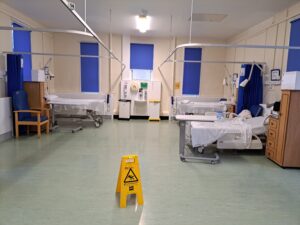
I was initially turned down for the RNOH 3 weeks inpatient hypermobility programme at the hotel- I failed triage as I had more than one fall in 6 months and was on more than 4 meds – I asked for advice in the Facebook group and they came to my aid when I was really despondent and asked for advice
I followed the advice given and negotiated with the team to be accepted on the condition that I hired a mobility scooter for use in the hotel
The course ( and my classmates) were amazing ..
I’m. Not gonna lie- it was very hard work,but individual and group physio , OT and psychology sessions , aswell as hydrotherapy and unlimited use of hotel pool were life changing
I will always be an EDSer with chronic ( and frequent acute) pain, but I’ve come away with a life changing toolkit of strategies to manage my pain and life
The hotel staff were amazing .. I’m quite limited with dressing /eating/swallowing/mobility but they went above and beyond
And can’t wait to work on putting what I s learnt into place outside the hotel bubble – very challenging, but I have negotiated goals and a 3 month follow up slot
And pacing/mindfulness/achievable goals/building on past successes and looking forwards- enjoying life with increased self confidence now feels within my grasp
At the age of 50, I can finally see the way forwards to living my life and managing my EDS and multitude of co-morbids ( I’m under 19 different care providers- like consultant bingo – cardiac/ortho/gynae/ent/max fax/dental/gastro:hand clinic/urology/pain clinic/soecialist nurse teams etc !!
Thanks to all of those who advised me on the programme, hire of mobility scooters and even PMd me your timetables ..
Absolutely life changing
Ps my referral was from GP to rheumatologist- initial referral to uclh, who were full, then dr mittal at stanmore, then covid – whole process took 3 years, but my classmates were only referred working the last 3 months
Other patients on controlled drugs/multiple meds/more than one fall in 6 months/with pots/needing nursing care receive the same programme in the hospital setting, Monday -Friday for 3 weeks at jubilee ward, stanmore
Henry’s story 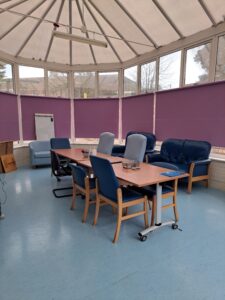
A few years back, I was fortunate enough to secure a place on the three week Residential program at Stanmore.
I first heard about the program, whilst attending an EDS conference in Ghent, Belgium, when, during the lunch break interval, I managed to have a chat with Dr Cohen from Stanmore. It was following this, that I set my mind on applying for the programme. On return to the UK, I contacted Dr Alan Hakim, the Rheumatologist who first diagnosed me with hEDS- and he was kind enough to write a supporting statement to Dr Cohen at Stanmore. Being a very popular programme, I know I did have to wait for a good number of months, until finally being accepted onto the program, taking place in the autumn of 2019. Prior to this, I did have a routine face-to-face appointment with one of the rheumatologists at the hospital.
My trifecta diagnoses, along with chronic vestibular, migraine and Small Fibre Peripheral Neuropathy, were first diagnosed in my late 40s/early 50s (I’m now 56), after many years of struggling along with various symptoms. Most recently, I’ve been assessed as medically retired.
The acceptance onto the Stanmore program, came at an ideal time, as deconditioning, along numerous painful joints, surgeries/procedures, and various soft tissue/musculoskeletal injuries were severely impeding my quality of life- my energy levels were very depleted, with constant exhaustion.
During the screening, once established that I have a PoTS diagnosis, the team at Stanmore, decided that I would be far better suited to the Residential/inpatient program, as opposed to the option of staying in a local hotel. This suited me fine.
Stanmore Hospital, in a leafy green suburb of London, seemed an ideal location. On arrival, there were approximately eight of us in the men’s ward, and across the corridor, a similar number in the ladies ward- with two ladies sharing a private room. We each had an adjustable hospital bed, and a curtain that we could draw around the bed for privacy. An offshoot of the ward, provided a space for rest and relaxation, with a television and also tables and chairs for our daily meals. We would choose our meal options for the day whilst having breakfast. On arrival at the hospital, we were all able to unpack using the drawers by our beds and a small locker for hanging clothes. Any controlled medications were taken in by the staff, to be distributed to us for our daily medication dosing points. At weekends, we are allowed to return home, arriving back to the facility on Monday mornings.
The relaxation rooms, situated off of the male and female wards, also became the setting for the various talks and knowledge shares led by the Stanmore staff.
I don’t fully recall, but I think we roughly had one of these per day. There was a key focus on explaining the mechanisms of chronic pain and the impact it can have on our minds and bodies. One particular slide that stuck with me, showed the trend on a graph, of pain progression over time- the key point here showed that if we fail to use effective pacing in our lives, the overall effect over time, is to significantly reduce our pain threshold, or tolerance to pain. I have been living a boom/bust cycle for many years – overdoing things when I felt a little more energy, and ultimately further adding to my exhaustion/pain burden.
The mornings followed a nice structure, where, after breakfast, we all made our way through the hospital to another area where the Team shared various meditative and relaxation routines with us. This included a body scan, along with an invitation to quieten the mind.
Aside from the information sharing sessions, delivered by physios, occupational therapists, and Pain specialist, there was also an physical activity focus. For example, as a group, we would go to the swimming pool, where we were lead through a number of gentle and mobilisation exercises. I can still remember one of the physiotherapists sitting at the side of the pool, watching me carefully, mindful that with PoTS, swimming pools can pose a potential trigger risk.
We also enjoyed sessions in a large gym hall, where the Residential patients came together with the handful of hotel patients, to participate in joint activities- which included table tennis, badminton, gentle movement with large exercise balls, and a kind of bowling game. Everyone could go at their own pace, and sit out any activity if preferred.
We also had scheduled sessions in the gym. On my first visit, I was accompanied by a couple of physiotherapists, who discussed with me my options, within the limitations of my health diagnoses and deconditioning. after that, I was basically left on my own in the gym. Coming from a background of numerous disturbing drop attacks in my local gym, which I subsequently realised was caused by PoTS, I would have preferred closer supervision on each of the gym visits. I guess that staffing resources did not allow for this.
We each had a one-to-one session with one of the team in a kitchen area, showing us safe options for food preparation, including use of a special knife to protect the arm and shoulders.
Of those of us on the program at the same time, we were not all there with hEDS/trifecta – with a number of the participants having other health diagnoses and symptoms. Prior to attending, I had assumed that we would all be from the same health community, given Stanmore‘s reputation with hEDS. That said, I did for the first time get to meet and speak with other patients sharing the same/similar health challenges. With this in mind, the delivery was more of a generic nature, although time spent on a one-to-one basis with the team, did allow us to share our specific health challenges.
Each of us also had time assigned for visits with the talking therapy team. Some of us were invited to continue the sessions beyond the duration of the program. I found this very beneficial, and it set me on a path, where over the past few years, I have engaged in various helpful talking therapy opportunities.
Before our time on the course ended, we were all assisted in devising daily/weekly activity plans- with an emphasis on looking forward and especially with a good pacing strategy in mind. On subsequent visits, after the programme, we were invited back to chart progress, agreeing any remedial action.
In summary, I was extremely grateful of the opportunity to attend the programme at Stanmore. The team were exemplary in their care, empathy, and delivery. I gained a lot from my interaction with the other patients, along with a realisation that my struggle was not unique to me. I did not necessarily learn anything new about my specific health diagnoses, which had been an expectation prior to attending. However, this certainly did not detract from the overall benefit derived, and I left with greater awareness of the mechanisms involved, and coping strategy options, in any type of chronic pain condition. I learnt a different way to think about my situation, planting ideas for further exploration, in areas such as boundary setting, and how I communicate with others about my daily health challenges.
Sadly for me, within a month or two of leaving the programme, a painful knee condition, eventually requiring meniscus root repair surgery, put a halt to my planned rehabilitation activities, leading to yet further deconditioning. And four years down the line, I find myself struggling with yet more overwhelming and debilitating injuries and health flares. I try to draw particularly on the lessons learnt about pacing, but currently find myself in need of yet more pain management input, and I’m currently exploring options for where I might be seen.
I would certainly recommend the Stanmore programme to anyone who might be interested in attending. It really is a great opportunity, and invitation for pause and reflection.
Emmas story
Stanmore’s pain management programme is a 3-week impatient programme that teaches people how to manage their own condition which consists of educational sessions, exercise and physio, psychology and group exercise sessions.
When I arrived at Stanmore I was burnt out- I had tried a variety of different approaches, seen a wide variety of specialists, bounced around a lot of specialists and services that just didn’t know what to do with me. But no one took the time to pause and look at me holistically- all I had was medical opinion nothing about how to manage pain, flare ups and my conditions day to day- leading to alternating cycles between avoidance of things due to fear of pain/making things worse or overdoing things trying to be ‘normal’- and causing a great deal more harm. The psychologist I saw at the pre programme assessment described me as an ‘exhausted warrior’, as I’d tried so hard to get better on my own, and I think that this is a phrase that many of us will resonate with. I had got to the point where I thought that just forcing myself to keep going/avoiding the warning signs for increasing pain and fatigue until I got to the crisis point was a solution, and I was fed up with the never-ending cycle on repeat and wanted something to help.
Most of the people that were admitted during my programme had similar issues with EDS, HSD and other similar conditions- and it was brilliant to be among people that understood, and everyone was supportive of other people’s needs, had their own hints and tips about what had worked for them, talking to help us to accept impact that our symptoms have on our lives.
The physio assessment was thorough, and they helped to explain things so that I could understand my body better- not only gave me exercises to do when discharged, gave me a sensible gym programme and gave me tips about ways to improve my walking gait and suggested a new walking aid which has been really useful to improve my pain and stamina walking.
The OT sessions were individually personalised to my own goals and things I needed to work on- hand pain, pacing, flare ups, reasonable adjustments at work etc.
The psychology sessions were helpful- to try and pull apart things that might be contributing to my stress and mood issues, looking at different ways of coping, and having the chance to just sit and talk openly about things that I wouldn’t want to put onto other people.
The educational sessions were around things like medication, understanding the body, flare ups, sleep and various other topics. I had previously done a lot of research about my condition- but I still managed to take home a lot of useful information from these sessions, and practical relaxation sessions- looking at different ways to relax to try and help manage life easier.
The most important lessons that I personally learnt were around valuing rest and pacing, putting myself first, saying no to being busy and overloaded with things all the time- alongside useful tools to manage my flare ups to try and prevent them getting longer. The friends/family information session was really informative and helped people that support me to learn more about how to support me to continue with my goals and learning from Stanmore.
Since leaving the programme I feel more in control of my body, able to use the tools I’ve learnt and that I can manage when I have a flare up despite the daily pain, fatigue and joint issues. I am enjoying seeing that I have realistic and achievable goals to work on- for the first time I see a better future and for that I will always be grateful to the staff and that I took a leap of faith to try this programme.
Rachels story 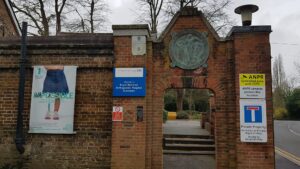
I have done the rehab course. Initially you meet with one of the team. They carry out an assessment and determine whether the course is suitable for you including your current health status.
This also helps you to understand the course better and enables you to determine whether you feel it’s going to be beneficial for you.
This course is not there to change your current plan of care, including looking at your medications or giving specific medical advice, they are helping you to live and manage your life, whatever challenges you have, be it mental, physical or practical.
It gives you a chance to press the reset button and take control of how you are and how you want to be moving forward, so looking at how you can achieve that.
They have physios (who actually know what EDS is !)
They have OTs
They have a Psychiatrist
You have one that will meet with you every day.
If you let them know your food requirements at the restaurant ( if you are staying at the hotel ) they will make sure there is something for you. We had 2 people with significant bowel conditions who were catered for.
It can be a bit quiet at times during the day, but it was a chance to rest or catch up on other home life things.
It really is what you make of it. I was having significant shoulder and lower back problems and the physio saw me every day. He initially just observed me walking, then we went from there. 3 weeks of daily decent physio, was so good and just one good aspect.
Also so good to talk with and have support from others with EDS. Yes there were some with other long term conditions but that made it even more interesting.