 Search
My experience in the Stanmore pain programme
Henry Gregor
A few years back, I was fortunate enough to secure a place on the three week Residential program at Stanmore.
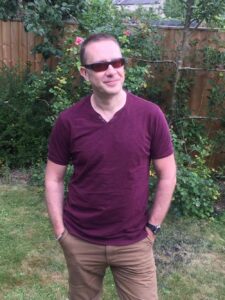
I first heard about the program, whilst attending an EDS conference in Ghent, Belgium, when, during the lunch break interval, I managed to have a chat with Dr Cohen from Stanmore. It was following this, that I set my mind on applying for the programme. On return to the UK, I contacted Dr Alan Hakim, the Rheumatologist who first diagnosed me with hEDS- and he was kind enough to write a supporting statement to Dr Cohen at Stanmore. Being a very popular programme, I know I did have to wait for a good number of months, until finally being accepted onto the program, taking place in the autumn of 2019. Prior to this, I did have a routine face-to-face appointment with one of the rheumatologists at the hospital.
My trifecta diagnoses, along with chronic vestibular, migraine and Small Fibre Peripheral Neuropathy, were first diagnosed in my late 40s/early 50s (I’m now 56), after many years of struggling along with various symptoms. Most recently, I’ve been assessed as medically retired.
The acceptance onto the Stanmore program, came at an ideal time, as deconditioning, along numerous painful joints, surgeries/procedures, and various soft tissue/musculoskeletal injuries were severely impeding my quality of life- my energy levels were very depleted, with constant exhaustion.
During the screening, once established that I have a PoTS diagnosis, the team at Stanmore, decided that I would be far better suited to the Residential/inpatient program, as opposed to the option of staying in a local hotel. This suited me fine.
Stanmore Hospital, in a leafy green suburb of London, seemed an ideal location. On arrival, there were approximately eight of us in the men’s ward, and across the corridor, a similar number in the ladies ward- with two ladies sharing a private room. We each had an adjustable hospital bed, and a curtain that we could draw around the bed for privacy. An offshoot of the ward, provided a space for rest and relaxation, with a television and also tables and chairs for our daily meals. We would choose our meal options for the day whilst having breakfast. On arrival at the hospital, we were all able to unpack using the drawers by our beds and a small locker for hanging clothes. Any controlled medications were taken in by the staff, to be distributed to us for our daily medication dosing points. At weekends, we are allowed to return home, arriving back to the facility on Monday mornings.
The relaxation rooms, situated off of the male and female wards, also became the setting for the various talks and knowledge shares led by the Stanmore staff.
I don’t fully recall, but I think we roughly had one of these per day. There was a key focus on explaining the mechanisms of chronic pain and the impact it can have on our minds and bodies. One particular slide that stuck with me, showed the trend on a graph, of pain progression over time- the key point here showed that if we fail to use effective pacing in our lives, the overall effect over time, is to significantly reduce our pain threshold, or tolerance to pain. I have been living a boom/bust cycle for many years – overdoing things when I felt a little more energy, and ultimately further adding to my exhaustion/pain burden.
The mornings followed a nice structure, where, after breakfast, we all made our way through the hospital to another area where the Team shared various meditative and relaxation routines with us. This included a body scan, along with an invitation to quieten the mind.
Aside from the information sharing sessions, delivered by physios, occupational therapists, and Pain specialist, there was also an physical activity focus. For example, as a group, we would go to the swimming pool, where we were lead through a number of gentle and mobilisation exercises. I can still remember one of the physiotherapists sitting at the side of the pool, watching me carefully, mindful that with PoTS, swimming pools can pose a potential trigger risk.
We also enjoyed sessions in a large gym hall, where the Residential patients came together with the handful of hotel patients, to participate in joint activities- which included table tennis, badminton, gentle movement with large exercise balls, and a kind of bowling game. Everyone could go at their own pace, and sit out any activity if preferred.
We also had scheduled sessions in the gym. On my first visit, I was accompanied by a couple of physiotherapists, who discussed with me my options, within the limitations of my health diagnoses and deconditioning. after that, I was basically left on my own in the gym. Coming from a background of numerous disturbing drop attacks in my local gym, which I subsequently realised was caused by PoTS, I would have preferred closer supervision on each of the gym visits. I guess that staffing resources did not allow for this.
We each had a one-to-one session with one of the team in a kitchen area, showing us safe options for food preparation, including use of a special knife to protect the arm and shoulders.
Of those of us on the program at the same time, we were not all there with hEDS/trifecta – with a number of the participants having other health diagnoses and symptoms. Prior to attending, I had assumed that we would all be from the same health community, given Stanmore‘s reputation with hEDS. That said, I did for the first time get to meet and speak with other patients sharing the same/similar health challenges. With this in mind, the delivery was more of a generic nature, although time spent on a one-to-one basis with the team, did allow us to share our specific health challenges.
Each of us also had time assigned for visits with the talking therapy team. Some of us were invited to continue the sessions beyond the duration of the program. I found this very beneficial, and it set me on a path, where over the past few years, I have engaged in various helpful talking therapy opportunities.
Before our time on the course ended, we were all assisted in devising daily/weekly activity plans- with an emphasis on looking forward and especially with a good pacing strategy in mind. On subsequent visits, after the programme, we were invited back to chart progress, agreeing any remedial action.
In summary, I was extremely grateful of the opportunity to attend the programme at Stanmore. The team were exemplary in their care, empathy, and delivery. I gained a lot from my interaction with the other patients, along with a realisation that my struggle was not unique to me. I did not necessarily learn anything new about my specific health diagnoses, which had been an expectation prior to attending. However, this certainly did not detract from the overall benefit derived, and I left with greater awareness of the mechanisms involved, and coping strategy options, in any type of chronic pain condition. I learnt a different way to think about my situation, planting ideas for further exploration, in areas such as boundary setting, and how I communicate with others about my daily health challenges.
Sadly for me, within a month or two of leaving the programme, a painful knee condition, eventually requiring meniscus root repair surgery, put a halt to my planned rehabilitation activities, leading to yet further deconditioning. And four years down the line, I find myself struggling with yet more overwhelming and debilitating injuries and health flares. I try to draw particularly on the lessons learnt about pacing, but currently find myself in need of yet more pain management input, and I’m currently exploring options for where I might be seen.
I would certainly recommend the Stanmore programme to anyone who might be interested in attending. It really is a great opportunity, and invitation for pause and reflection.