 Search
It’s very easy for me to view myself as the weak link
I recently surpassed my twentieth year of suffering with Ehlers-Danlos syndrome (EDS) and several of its comorbidities. My EDS is still finding ways to challenge me, for example, I had a simple procedure on my toe seven months ago that still hasn’t fully healed. EDS has caused me to develop an array of other issues including POTS, mast cell activation syndrome, endometriosis, and Raynaud’s.
I’ve been lucky enough to be interviewed recently for a podcast on Spotify that aimed to ascertain if we are doing enough to represent disability in my profession. I’m a qualified gastroenterology dietitian and I have been employed by the NHS for five years now.
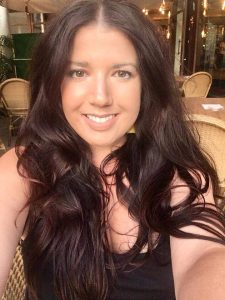
Bianca
I won’t pretend it’s been easy working full time and I’ve had periods of my life where I’ve been unable to work at all. Studying for my degree was hard also and I’ve lost count of the times I felt like giving up. I was lucky at university that my university lecturer, Sarah, was very helpful and encouraging and helped to instigate reasonable adjustments on my hospital work placements, and reassured me that despite my condition I still have a lot to offer an employer.
This has remained with me, as it’s all too easy for me to become stuck in a vortex of guilt , from having regular episodes of sickness, letting team members down, and cancelling plans with friends and family. It’s very easy for me to view myself as the weak link, but shouldn’t we be celebrating all the good work individuals with long term conditions and disabilities are achieving despite our poor health?
My career trajectory isn’t perhaps as advanced as my peers, but I think that it’s important to be kind to yourself, something I’m learning as I’ve got older – it’s hard being ambitious in a body that doesn’t work as it should. I feel the last year or so I’ve not sought out further professional opportunities but we’ve been through a pandemic, right?
One thing that has stood out to me as frustrating when I reflect on the last few years, is that it has taken a worldwide pandemic to be able to identify that individuals are successfully able to work from home.
Bianca Tharme-Loose,
I received a shielding letter and as I was treating patients in a ward environment, I had to stop. I haven’t been able to treat patients on a hospital ward for over two years due to being clinically extremely vulnerable, but I’ve been able to carry out hybrid working by conducting outpatient clinics. I hope to soon start working both on the wards and working from home; something that my manager has been very supportive of.
Hybrid working and working from home is now available for so many roles and I really believe seeking opportunities to work from home and requesting reasonable adjustments is integral to making employment more sustainable for people with EDS. I believe being forthcoming about my condition has enabled me to get the support I need whether that’s adjusted start times, supportive pen grips, or an ergonomic chair. One thing that still stands out to me is that people with long-term conditions are not equally represented in media, TV, and in employment, and I feel this needs to change. We need to keep discussing long-term conditions and adaptations in the workplace – why can’t individuals with long-term illness have the same opportunities as healthy individuals?
I do think having a life-changing illness since I was a teenager has given me a certain level of resilience to keep going despite difficulties I’ve faced. I won’t pretend working with EDS is easy, it may seem insurmountable at times, but with adaptions it’s been achievable.